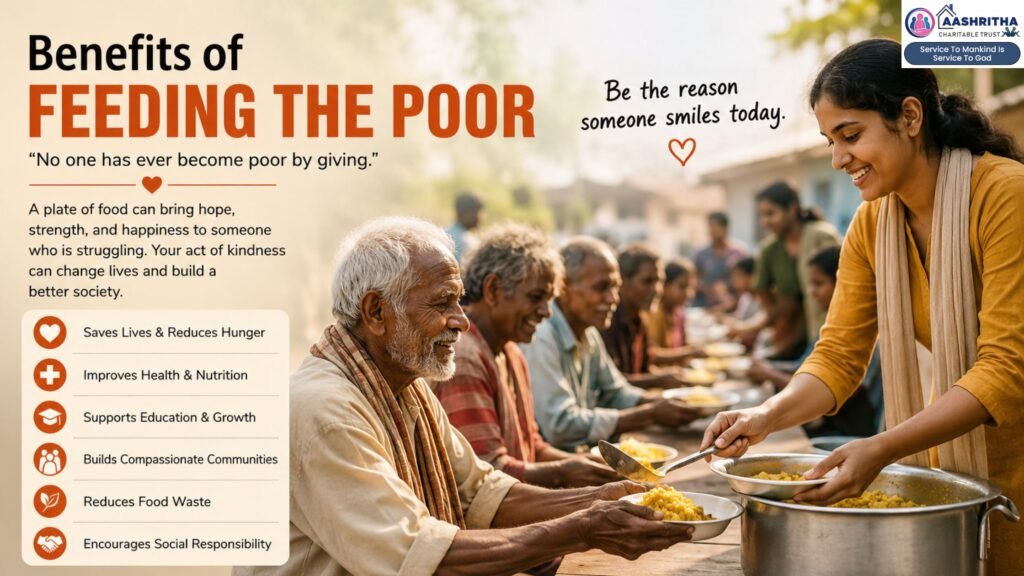
Every meal shared with someone in need has the power to transform lives. The Benefits of Feeding the Poor extend far beyond satisfying hunger—they improve health, restore dignity, strengthen communities, and inspire compassion. Understanding the Importance of feeding the poor helps individuals, families, businesses, and organizations recognize that food donation is one of the simplest yet most meaningful acts of kindness. The Food donation benefits are visible in healthier communities, reduced hunger, and stronger social bonds. At Aashritha, we believe that no one should sleep hungry, and every contribution can create lasting change for vulnerable people across Vijayawada, Andhra Pradesh, and beyond.
Benefits of Feeding the Poor
Hunger remains one of the world’s most pressing humanitarian challenges. Millions of people struggle every day to secure even one nutritious meal. While governments and organizations continue working toward hunger elimination, individual actions also play a vital role.
Feeding the poor is more than offering food—it’s about offering hope, compassion, and the opportunity for a better tomorrow. Whether it’s through Annadanam, food drives, community kitchens, or supporting charitable organizations, every effort contributes toward creating a hunger-free society.
Why Feeding the Poor Matters
The Importance of feeding the poor lies in addressing one of humanity’s most basic needs. Food is essential for survival, health, education, and economic productivity.
When someone receives a nutritious meal:
- Hunger is reduced immediately.
- Health improves.
- Children perform better in school.
- Adults become more productive.
- Families experience less financial stress.
- Communities become stronger and more compassionate.
A simple meal can restore hope to someone facing difficult circumstances.
Top Benefits of Feeding the Poor
1. Saves Lives
The greatest of all Benefits of Feeding the Poor is saving lives.
For people experiencing homelessness, elderly individuals without support, orphaned children, and struggling families, access to nutritious food can mean the difference between health and illness.
Regular food assistance helps reduce malnutrition and prevents hunger-related health complications.
2. Improves Physical Health
Nutritious meals provide:
- Essential vitamins
- Proteins
- Minerals
- Energy
Proper nutrition strengthens immunity, reduces illness, and promotes healthier lives.
Children receiving regular meals experience better physical growth and cognitive development.
3. Supports Mental Well-being
Hunger affects emotional health.
People experiencing food insecurity often suffer from:
- Anxiety
- Depression
- Stress
- Social isolation
Food assistance provides emotional comfort, dignity, and reassurance that someone cares.
4. Gives Children Better Opportunities
Children cannot focus on learning when they are hungry.
One of the biggest Food donation benefits is improving educational outcomes.
Well-fed children are more likely to:
- Attend school regularly
- Concentrate in classrooms
- Participate in activities
- Achieve better academic performance
Helping children today creates stronger communities tomorrow.
5. Reduces Poverty
Food expenses consume a significant portion of low-income families’ budgets.
When families receive food support, they can allocate limited income toward:
- Education
- Healthcare
- Housing
- Employment opportunities
This creates a positive cycle that helps families move toward financial stability.
6. Builds Compassionate Communities
Communities become stronger when people care for one another.
Food donation encourages:
- Volunteerism
- Community participation
- Social unity
- Collective responsibility
Acts of kindness inspire others to contribute, creating lasting social impact.
7. Preserves Human Dignity
Every person deserves respect regardless of financial circumstances.
Providing meals with kindness restores confidence and dignity to those facing hardship.
Food assistance is not charity alone—it is an expression of humanity.
8. Reduces Food Waste
Millions of tons of edible food are wasted every year.
Instead of discarding surplus food, donating it helps:
- Feed hungry people
- Reduce environmental waste
- Lower landfill pollution
- Promote responsible consumption
Reducing food waste benefits both society and the environment.
9. Encourages Social Responsibility
One of the overlooked Benefits of Feeding the Poor is encouraging individuals and organizations to become socially responsible.
Schools, colleges, businesses, and local communities often organize:
- Food drives
- Community kitchens
- Annadanam programs
- Charity events
These initiatives foster a culture of giving.
10. Creates Long-Term Social Change
Hunger affects healthcare, education, employment, and economic growth.
When communities work together to reduce hunger, society experiences:
- Better public health
- Reduced inequality
- Stronger economies
- Greater social harmony
Small acts of generosity collectively create lasting transformation.
Emotional Story: One Meal That Changed Everything
Imagine an elderly woman living alone in Vijayawada after losing her family. With limited income, she often skipped meals to afford medicines. Hunger became a daily reality, affecting both her health and spirit.
One afternoon, volunteers from a local charitable initiative delivered a warm, nutritious meal. It wasn’t just food—it was hope. The volunteers continued visiting regularly, ensuring she had meals and someone to talk to.
Her health gradually improved, and she regained the strength to participate in community activities.
This story reflects countless real-life experiences where a single meal becomes the beginning of renewed hope.
Food Donation Benefits for Society
The Food donation benefits extend beyond individuals.
Communities experience:
- Lower hunger rates
- Better public health
- Stronger social connections
- Increased volunteer participation
- Reduced food waste
- Greater awareness about poverty
Businesses also benefit by participating in food donation initiatives through Corporate Social Responsibility (CSR), enhancing employee engagement while making a meaningful social impact.
Hunger in India: Why Action Is Needed
India has made significant progress in reducing poverty, yet food insecurity remains a challenge for many families. Urban areas such as Vijayawada and rural communities across Andhra Pradesh continue to face situations where vulnerable groups—including senior citizens, orphaned children, daily wage workers, and people experiencing homelessness—need access to nutritious meals.
Community support, nonprofit organizations, volunteers, and CSR partnerships play a vital role in bridging this gap. Every donated meal contributes to the broader goal of reducing hunger and improving quality of life.
How You Can Help
You don’t need extraordinary resources to make a difference.
You can:
- Donate meals.
- Sponsor Annadanam programs.
- Volunteer at food distribution drives.
- Support NGOs working for hunger elimination.
- Organize food donation campaigns.
- Encourage your workplace to participate in CSR initiatives.
- Spread awareness about hunger.
Every contribution matters.
Why Choose Aashritha?
At Aashritha, compassion is transformed into action through initiatives that support vulnerable communities. By focusing on hunger relief, elder care, and community welfare, Aashritha works to ensure that no one is left behind.
Whether it’s providing nutritious meals, supporting senior citizens, or engaging volunteers and corporate partners, every effort is directed toward creating a more caring society in Vijayawada, Andhra Pradesh, and surrounding regions.
Together, we can make food accessible to those who need it most.
Conclusion
The Benefits of Feeding the Poor go far beyond filling an empty stomach. They improve health, strengthen communities, reduce poverty, preserve dignity, and inspire hope. Understanding the Importance of feeding the poor reminds us that even a single meal can transform someone’s life, while the Food donation benefits extend to society as a whole through reduced hunger, lower food waste, and stronger community bonds.
By supporting organizations like Aashritha, volunteering your time, or encouraging CSR initiatives within your workplace, you become part of a movement dedicated to building a hunger-free future. Together, we can ensure that every individual has access to the nourishment they need to live with dignity and hope.
Frequently Asked Questions (FAQs)
1. What are the Benefits of Feeding the Poor?
Feeding the poor improves health, reduces hunger, supports education, preserves dignity, strengthens communities, and contributes to long-term poverty reduction.
2. Why is the Importance of feeding the poor emphasized?
Food is a basic human necessity. Providing nutritious meals helps individuals live healthier, more productive lives while promoting compassion and social responsibility.
3. What are the Food donation benefits for society?
Food donation reduces food waste, supports vulnerable families, improves public health, encourages volunteerism, and builds stronger, more caring communities.
4. How can I donate food in Vijayawada?
You can contribute through trusted organizations like Aashritha by sponsoring meals, participating in Annadanam programs, or supporting community food distribution initiatives in Vijayawada and Andhra Pradesh.
5. Can companies participate in hunger relief programs?
Yes. Businesses can support hunger relief through CSR initiatives, meal sponsorships, employee volunteering, and partnerships with NGOs like Aashritha.
6. How can students help feed the poor?
Students can volunteer at food drives, organize donation campaigns, raise awareness about hunger, and participate in community service programs.
7. Is food donation better than wasting surplus food?
Absolutely. Donating safe, surplus food helps feed people in need, reduces landfill waste, and supports environmental sustainability.
Make a Difference with Aashritha
A single meal can restore hope, dignity, and strength to someone facing hunger. Join Aashritha in creating a hunger-free community across Vijayawada, Andhra Pradesh, and beyond.
Donate to sponsor nutritious meals for those in need. Volunteer your time to support food distribution and community outreach. Partner through CSR to help your organization create meaningful social impact. Apply for an Internship to gain hands-on experience in community service while contributing to hunger elimination.
Together, we can ensure that no one goes to bed hungry. Every meal shared is a step toward a more compassionate and caring society.