
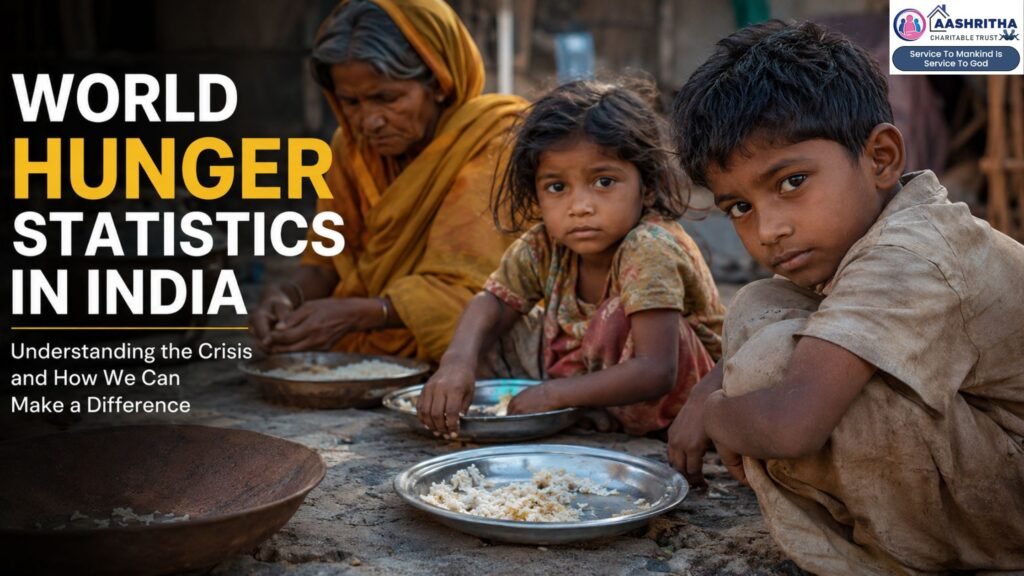
Despite remarkable economic progress, World hunger statistics in India continue to reveal a concerning reality. Millions of people across the country still struggle to access nutritious meals every day. While India has made significant improvements in reducing undernourishment over the past two decades, hunger, malnutrition, and food insecurity remain major challenges, especially among children, elderly people, and economically vulnerable families. Understanding World hunger statistics in India helps us recognize the urgency of collective action and inspires communities, NGOs, businesses, and individuals to contribute toward a hunger-free nation.
At Aashritha, we believe that no one should sleep hungry. Through food donation drives, elderly care initiatives, and community outreach programs in Vijayawada, Andhra Pradesh, we work to ensure nutritious meals reach those who need them the most.
Hunger in India: A Reality Beyond Numbers
Imagine an elderly person skipping meals so their grandchildren can eat. Think of a child attending school without breakfast, struggling to concentrate because of hunger. These stories are not isolated—they are part of India’s ongoing food insecurity challenge.
Although India is one of the world’s largest food producers, unequal food distribution, poverty, unemployment, climate change, food wastage, and inflation continue to affect millions.
Recent international reports indicate encouraging progress, with India’s estimated prevalence of undernourishment declining substantially over the past two decades. However, child malnutrition, food affordability, and nutritional deficiencies remain significant concerns.
Important World Hunger Statistics in India
Here are some important insights about World hunger statistics in India:
- India’s estimated prevalence of undernourishment is around 12%, showing improvement compared to previous decades according to recent FAO-based estimates.
- Millions of Indians still cannot consistently afford a healthy diet despite improvements in food availability.
- Child stunting, wasting, and undernutrition continue to affect millions of children under five years of age.
- Rising food prices continue to make nutritious food inaccessible for many low-income households.
- Hunger is often concentrated among rural communities, urban poor, migrant workers, elderly citizens, and vulnerable families.
These figures remind us that hunger is not simply about food production—it is also about access, affordability, nutrition, and social support.
Why Hunger Still Exists in India
Several interconnected factors contribute to hunger.
1. Poverty
Many families simply cannot afford nutritious meals every day.
2. Food Inflation
As food prices increase, low-income households often reduce meal quality or quantity.
3. Food Wastage
India wastes enormous quantities of edible food while millions remain hungry.
4. Climate Change
Floods, droughts, and unpredictable weather reduce agricultural productivity and food availability.
5. Unemployment
Loss of income directly impacts a family’s ability to purchase food.
6. Poor Nutrition Awareness
Even when food is available, balanced nutrition may be lacking, leading to hidden hunger caused by vitamin and mineral deficiencies.
The Impact of Hunger on Society
Hunger affects much more than empty stomachs.
Poor Child Development
Children suffering from malnutrition often experience slower physical and mental growth.
Lower Educational Performance
Hungry students struggle to focus and perform academically.
Health Problems
Undernutrition weakens immunity and increases vulnerability to diseases.
Economic Loss
A malnourished workforce reduces national productivity.
Elderly Vulnerability
Senior citizens living alone often experience food insecurity due to financial or physical limitations.
Organizations like Aashritha help bridge this gap by supporting vulnerable elderly individuals and families with food assistance.
Hunger in Andhra Pradesh and Vijayawada
In Vijayawada, Andhra Pradesh, many economically weaker families, elderly people, daily wage workers, and abandoned senior citizens depend on community support for regular meals.
NGOs play a crucial role by:
- Organizing food donation programs
- Serving nutritious meals
- Supporting senior citizens
- Conducting community feeding initiatives
- Promoting nutrition awareness
Aashritha regularly works with volunteers and donors to provide food support where it is needed most.
Government Initiatives Fighting Hunger
India has implemented several programs to reduce hunger, including:
- Public Distribution System (PDS)
- PM Garib Kalyan Anna Yojana
- Mid-Day Meal Scheme
- Integrated Child Development Services (ICDS)
- Poshan Abhiyaan
These initiatives have improved food access for millions, but NGOs remain essential in reaching underserved populations and filling critical gaps.
How NGOs Help Reduce Hunger
Non-profit organizations make a significant impact through:
- Food donation drives
- Community kitchens
- Elderly meal support
- Nutrition education
- School meal assistance
- Disaster relief food distribution
Aashritha believes sustainable change comes from consistent community participation rather than one-time efforts.
What Individuals Can Do
Every person can help reduce hunger.
Donate Food
Support trusted NGOs that distribute meals responsibly.
Volunteer
Spend time serving meals during community drives.
Reduce Food Waste
Plan meals carefully and donate surplus food whenever possible.
Support Local Farmers
Buying locally helps strengthen food security.
Spread Awareness
Educate friends and family about hunger and nutrition.
Even small contributions create meaningful change.
The Role of Corporate Social Responsibility (CSR)
Businesses can significantly reduce hunger through CSR initiatives by:
- Sponsoring meal distribution
- Supporting nutrition programs
- Funding elderly care projects
- Organizing employee volunteering
- Partnering with NGOs like Aashritha
CSR partnerships create lasting social impact while strengthening community development.
Aashritha’s Commitment to Fighting Hunger
At Aashritha, our mission extends beyond providing shelter and elderly care. We work to ensure that vulnerable individuals receive nutritious meals with dignity.
Our initiatives include:
- Daily food distribution
- Elderly care support
- Community feeding programs
- Volunteer engagement
- Donation campaigns
- CSR collaborations
- Awareness programs
Every meal served represents hope, compassion, and humanity.
Conclusion
The latest World hunger statistics in India show encouraging progress compared with previous decades, yet millions still struggle with food insecurity, malnutrition, and limited access to nutritious diets.
Ending hunger requires collaboration between governments, NGOs, businesses, and compassionate citizens. Together, we can ensure that every child, every elderly person, and every family has access to healthy food.
At Aashritha, we invite you to become part of this mission.
Frequently Asked Questions (FAQs)
1. What are the latest World hunger statistics in India?
Recent international estimates suggest India’s prevalence of undernourishment is around 12%, showing notable improvement over previous decades, although millions still face food insecurity and nutritional challenges.
2. Why does hunger still exist in India?
Major reasons include poverty, unemployment, food inflation, climate change, food wastage, and unequal food distribution.
3. How can I help reduce hunger?
You can donate food, volunteer with NGOs, contribute financially, reduce food waste, or support community feeding initiatives.
4. How does Aashritha fight hunger?
Aashritha conducts food donation drives, elderly care programs, community meal distribution, volunteer activities, and nutrition support initiatives, particularly in Vijayawada and Andhra Pradesh.
5. How can companies contribute through CSR?
Companies can support meal distribution, sponsor nutrition projects, fund elderly care programs, organize employee volunteering, and partner with NGOs like Aashritha to create sustainable community impact.
Make a Difference Today
Every contribution can change a life.
❤️ Donate to help provide nutritious meals for vulnerable children and elderly individuals.
🤝 Volunteer your time to support food distribution and community service activities.
🏢 CSR Partnerships: If your organization wants to create meaningful social impact, partner with Aashritha to support hunger relief, elderly care, and nutrition initiatives in Vijayawada, Andhra Pradesh.
🎓 Internships: Students and young professionals passionate about social service are welcome to join Aashritha as interns and contribute toward building a hunger-free future.
Together, we can ensure that no one goes to bed hungry.