
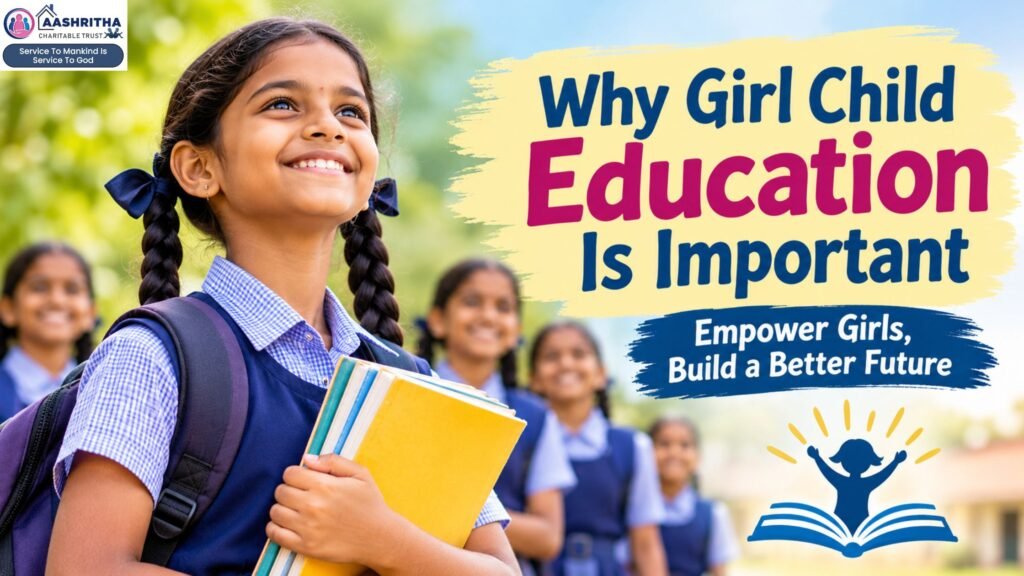
Education is one of the most powerful tools for transforming lives, communities, and society. Understanding why girl child education is important is essential for creating a world where every child has the opportunity to learn, grow, and achieve her dreams, regardless of her financial background. Educating a girl is not just about sending her to school—it is about empowering her to become independent, confident, informed, and capable of shaping her future.
In many parts of India, girls still face challenges such as poverty, early marriage, gender discrimination, lack of educational resources, and limited access to schools. These barriers can prevent them from completing their education and reaching their full potential. Supporting girl child education can help break these cycles and create opportunities for generations to come.
At Aashritha, supporting children and communities through compassion and social responsibility is an important part of building a brighter future. By supporting educational initiatives, donors and volunteers can help make learning accessible to girls who need it most.
1. Why Girl Child Education Is Important for Society
Girl child education plays a vital role in the development of a healthy, progressive, and equal society. When girls receive quality education, they gain knowledge, develop critical thinking skills, and become better equipped to make informed decisions about their lives.
An educated girl can contribute to her family, participate in community development, pursue meaningful employment, and become a role model for younger generations. Education also encourages equality by challenging traditional beliefs that limit girls’ opportunities.
The importance of educating girls goes beyond individual success. It strengthens communities, improves social awareness, and contributes to a country’s economic and cultural development. Every girl who receives an opportunity to learn represents progress toward a more inclusive society.
2. Education Helps Girls Become Independent
One of the most important benefits of education is financial and personal independence. Girls who complete their education have better opportunities to pursue careers, earn an income, and support themselves without depending entirely on others.
Education helps girls understand their rights, explore career options, develop professional skills, and make decisions confidently. Whether a girl dreams of becoming a doctor, teacher, engineer, entrepreneur, police officer, or scientist, education provides the foundation to pursue those ambitions.
Educated women are also more likely to participate in household financial decisions and contribute to family income. Supporting a girl’s education today can help her become a self-reliant adult tomorrow.
3. Breaking the Cycle of Poverty Through Education
Poverty is one of the major reasons girls discontinue their education. Families struggling to meet basic needs may find it difficult to afford school fees, uniforms, books, transportation, and other educational expenses.
When girls are denied education, their future employment opportunities may become limited, increasing their risk of remaining financially dependent. This cycle can continue from one generation to another.
Providing educational assistance can help disadvantaged families overcome some of these barriers. Support for school supplies, tuition fees, learning materials, transportation, and nutritious meals can make a meaningful difference in a girl’s ability to attend and complete school.
An educated girl can later support her family, improve living conditions, and help ensure that her own children receive education. In this way, education becomes a long-term investment in poverty reduction.
4. Improving Health, Nutrition, and Awareness
Education gives girls access to important information about health, hygiene, nutrition, personal safety, and well-being. It helps them understand the importance of healthy habits and make informed decisions throughout their lives.
Educated girls are better equipped to recognize health risks, seek medical assistance when needed, and understand the value of proper nutrition and sanitation. They can also share this knowledge with their families and communities.
Education can improve awareness of maternal health, child care, reproductive health, and family well-being later in life. When girls grow into informed women, the benefits can extend to future generations.
5. Reducing Child Marriage and Gender Discrimination
In some communities, girls face pressure to marry at a young age because of financial hardship, social expectations, or traditional practices. Early marriage often interrupts education and can restrict a girl’s ability to make decisions about her future.
Access to education gives girls more opportunities and helps them understand their rights. Staying in school can support aspirations beyond marriage and encourage families to invest in their daughters’ futures.
Schools also provide an environment where girls can interact with teachers, learn about equality, build friendships, and develop confidence. Education helps challenge harmful stereotypes and promotes the belief that girls deserve the same opportunities as boys.
6. Building Confidence, Leadership, and Self-Esteem
Education is not limited to textbooks, exams, and certificates. It also helps girls develop communication skills, confidence, problem-solving abilities, teamwork, and leadership qualities.
Classroom participation, sports, cultural activities, group projects, and public speaking allow girls to express themselves and discover their strengths. These experiences can help them become confident individuals who are willing to take responsibility and pursue their goals.
An educated girl is more likely to speak up, participate in community activities, and advocate for herself and others. These qualities can help create future leaders who contribute to positive social change.
7. The Current Status of Girl Child Education in India
India has made progress in improving girls’ access to education, but challenges remain, particularly when girls transition to higher grades.
According to India’s UDISE+ 2024–25 school education data:
- Girls’ Gross Enrolment Ratio (GER) at the secondary level reached 80.2%.
- Girls’ Gross Enrolment Ratio at the higher secondary level reached 60.9%.
- Nearly four out of ten girls, measured against the higher-secondary age-group enrolment ratio, are not represented in higher-secondary enrolment.
These figures highlight the importance of helping girls continue their education beyond the early school years. Financial challenges, distance to schools, household responsibilities, safety concerns, and social barriers can affect attendance and retention.
Source: UDISE+ 2024–25 school education data and analysis published by NITI Aayog.
8. How Educational Support Can Change a Girl’s Life
Educational support does not always require a large investment. Sometimes, providing a school bag, notebooks, a uniform, books, tuition support, or access to digital learning can help a girl continue her education.
Consider these illustrative examples of how support can make a difference:
- School essentials: Providing uniforms, stationery, books, and school bags helps remove some of the financial burden on families.
- Academic assistance: Tuition, mentoring, and learning support can help girls improve their grades and overcome learning difficulties.
- Digital access: Access to computers, online learning resources, and internet connectivity can open new educational opportunities.
- Encouragement and mentorship: Guidance from teachers, volunteers, and mentors can motivate girls to continue studying and pursue their ambitions.
These are examples of potential support outcomes, not measured Aashritha-specific results. Individual impact depends on a girl’s needs and the support she receives.
9. The Role of Parents, Donors, and Volunteers
Promoting girl child education requires the collective effort of families, communities, schools, NGOs, donors, and volunteers.
Parents can encourage daughters to study, help them attend school regularly, and support their aspirations.
Donors can contribute toward educational expenses, learning materials, scholarships, and other essential resources for children from disadvantaged backgrounds.
Volunteers can support children through tutoring, mentoring, career guidance, educational awareness programmes, and community outreach.
NGOs and charitable organizations can help identify educational needs, connect children with resources, encourage school continuation, and work with families and communities to address barriers to learning.
Every contribution, whether financial, material, or through time and effort, can help create an environment where girls are encouraged to learn and succeed.
10. How You Can Support Girl Child Education Through Aashritha
Supporting education is a meaningful way to contribute to long-term social development. At Aashritha, individuals who believe in helping disadvantaged communities can explore opportunities to support charitable initiatives and contribute toward a better future.
You can make a difference by:
- Donating toward educational needs and child welfare initiatives.
- Supporting learning materials such as notebooks, books, uniforms, and school supplies.
- Volunteering your time and skills for educational or community programmes.
- Spreading awareness about the importance of educating girls.
- Encouraging friends, family, and organizations to participate in social causes.
Visit Aashritha.org to learn more about the organization and explore ways to support its initiatives.
Even a small contribution, when combined with the efforts of others, can help bring meaningful opportunities to children who need support.
Conclusion
Understanding why girl child education is important is the first step toward building a more equal, compassionate, and empowered society. Education gives girls the ability to become independent, break the cycle of poverty, protect their well-being, develop confidence, and create better opportunities for themselves and their families.
Although India has made significant progress in girls’ enrolment, continuing education through secondary and higher-secondary levels remains a challenge for many. Families, donors, volunteers, and charitable organizations all have a role to play in ensuring that financial or social barriers do not prevent girls from learning.
When we educate a girl, we invest in the future of an entire community. Join Aashritha in supporting meaningful social initiatives, spreading awareness, and helping build a future where every girl has the opportunity to learn, dream, and succeed.
Educate a girl today. Empower a generation tomorrow.
Frequently Asked Questions (FAQs)
1. Why girl child education is important?
Girl child education is important because it promotes independence, equality, confidence, financial stability, and better health awareness. It empowers girls to pursue careers, make informed decisions, and contribute positively to their families and communities.
2. What are the benefits of educating a girl child?
The benefits include improved employment opportunities, reduced poverty, greater confidence, better health awareness, increased decision-making ability, and stronger participation in community development.
3. How does girl child education help reduce poverty?
Education provides girls with knowledge, qualifications, and skills that can lead to better employment and income opportunities. As educated women become financially independent, they can improve their families’ living conditions and support the education of future generations.
4. What are the major barriers to girl child education in India?
Common barriers include poverty, child marriage, gender discrimination, school distance, safety concerns, lack of sanitation facilities, household responsibilities, and limited access to educational resources.
5. How can I support girl child education?
You can support girl child education by donating school supplies, sponsoring educational expenses where programmes are available, volunteering as a mentor or tutor, supporting charitable initiatives, and spreading awareness.
6. How can volunteers help girls continue their education?
Volunteers can provide tutoring, mentorship, career guidance, help with learning activities, assist in awareness campaigns, and encourage families to prioritize education and school attendance.
7. Where can I contribute to social welfare and education initiatives?
You can visit Aashritha.org to learn about its charitable work and explore ways to contribute to social welfare initiatives through donations, volunteering, and community participation.