
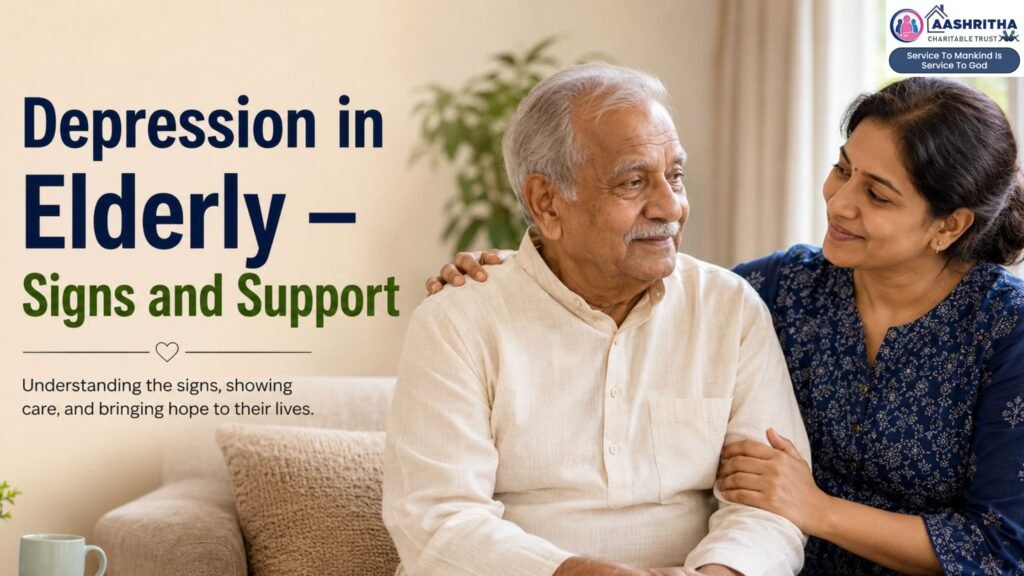
Aging is a natural part of life, but emotional struggles should never be considered a normal part of growing old. Depression in elderly people is becoming increasingly common across India, especially among senior citizens who experience loneliness, health complications, loss of independence, or lack of family support. In cities like Vijayawada and across Andhra Pradesh, many families are now recognizing the importance of timely emotional care and professional support for senior citizens.
While physical health often receives attention, mental health is equally important. Many older adults silently suffer from sadness, anxiety, isolation, and emotional stress without openly discussing it. This is why emotional support for elderly individuals is essential for improving their quality of life, confidence, and overall wellbeing.
Organizations like Aashritha Charitable Trust are working towards providing compassionate care, companionship, shelter, and dignity to senior citizens in Vijayawada, Andhra Pradesh. Through old age homes, community care, and support initiatives, elderly individuals can experience safety, emotional stability, and social connection.
Understanding Depression in Elderly People
Depression is not simply “feeling sad.” It is a serious mental health condition that affects thoughts, emotions, behaviour, sleep, appetite, and physical wellbeing. Unfortunately, depression in elderly individuals often goes unnoticed because the symptoms may be mistaken for normal aging.
Older adults may hesitate to speak about their emotional pain due to fear, stigma, or feeling like a burden to their families. Some may even believe that sadness is unavoidable in old age. However, depression can and should be treated with proper care, attention, and emotional support.
In Andhra Pradesh, changing family structures, migration of children to other cities or countries, and increasing social isolation have contributed to rising mental health concerns among senior citizens. Elderly people who live alone are especially vulnerable to emotional distress.
Common Causes of Depression in Elderly
Several emotional, physical, and social factors contribute to depression among older adults. Understanding these causes helps families provide better care and timely intervention.
1. Loneliness and Social Isolation
One of the biggest reasons for depression in elderly people is loneliness. Many seniors lose daily social interaction after retirement or after children move away. Living alone for long periods can create feelings of emptiness and sadness.
2. Loss of Loved Ones
The loss of a spouse, siblings, or close friends can deeply affect emotional health. Grief sometimes develops into long-term depression if proper emotional support is unavailable.
3. Chronic Health Conditions
Conditions such as diabetes, arthritis, heart disease, memory loss, or mobility issues can impact mental wellbeing. Ongoing pain and dependence on others often increase emotional stress.
4. Financial Stress
Some senior citizens experience financial insecurity after retirement. Worries related to medical expenses or dependency on family members may contribute to depression.
5. Lack of Family Attention
Emotional neglect can significantly affect older adults. Even when physical needs are met, the absence of conversation, companionship, and affection can lead to emotional suffering.
6. Reduced Independence
Many elderly individuals struggle emotionally when they can no longer perform daily activities independently. Feeling dependent sometimes lowers self-esteem and confidence.
Signs and Symptoms of Depression in Elderly
Recognizing symptoms early can help families provide timely care. The following signs should never be ignored:
- Persistent sadness or hopelessness
- Loss of interest in hobbies and activities
- Increased irritability or anger
- Sleeping too much or too little
- Loss of appetite
- Fatigue and lack of energy
- Difficulty concentrating
- Social withdrawal
- Anxiety or excessive worry
- Frequent crying
- Talking negatively about life
- Feelings of worthlessness
- Sudden memory issues
- Thoughts about death or giving up
Sometimes, depression in elderly people appears through physical symptoms rather than emotional complaints. Seniors may repeatedly mention headaches, body pain, or tiredness without any major medical reason.
Why Emotional Support for Elderly Is Important
Providing emotional support for elderly individuals helps them feel valued, respected, and connected. Emotional care improves mental health, boosts confidence, and creates a sense of belonging.
Studies and elderly care observations show that seniors who receive companionship and emotional care are often happier, healthier, and more socially active. Supportive environments can reduce stress, anxiety, and feelings of isolation.
Benefits of Emotional Support for Elderly
Improved Mental Health
Regular interaction, counseling, and companionship help reduce sadness and emotional stress.
Better Physical Health
Positive emotional wellbeing often improves sleep, appetite, and recovery from illness.
Increased Social Engagement
Supportive environments encourage elderly individuals to participate in activities and build friendships.
Greater Sense of Purpose
Simple involvement in daily routines, conversations, and community activities gives seniors motivation and happiness.
Reduced Risk of Severe Depression
Timely emotional care can prevent worsening mental health conditions.
Ways to Provide Emotional Support for Elderly
Families and caregivers can make a major difference through simple yet meaningful actions.
Spend Quality Time
Regular conversations and visits help elderly individuals feel cared for and emotionally secure.
Encourage Social Activities
Group interactions, spiritual gatherings, recreational activities, and community events help seniors remain socially active.
Listen with Patience
Allow older adults to express their emotions without judgment. Sometimes, listening itself becomes powerful emotional support.
Promote Physical Activity
Walking, yoga, and light exercises improve mood and reduce stress.
Encourage Medical Consultation
Professional counseling and mental health support can help elderly individuals manage depression effectively.
Create a Positive Environment
A peaceful, respectful, and caring atmosphere improves emotional wellbeing.
Role of Old Age Homes in Supporting Mental Health
Modern elderly care centers do much more than provide accommodation. Many old age homes now focus on emotional wellbeing, social engagement, medical care, and companionship.
In Vijayawada, organizations like Aashritha Charitable Trust are helping senior citizens live with dignity and emotional security. Their services focus on creating a compassionate environment where elderly residents receive attention, care, nutritious food, social interaction, and emotional companionship.
Old age homes can support seniors through:
- Group activities and recreation
- Emotional counseling
- Medical monitoring
- Spiritual engagement
- Social interaction
- Safe and peaceful living conditions
- Daily assistance and caregiving
For elderly individuals living alone or without adequate family support, such facilities can greatly improve emotional health and reduce depression.
How Families in Vijayawada and Andhra Pradesh Can Help
Families play the most important role in reducing depression in elderly individuals. In many cases, small gestures make a huge emotional impact.
Practical Steps Families Can Take
- Call and visit elderly parents regularly
- Include them in family discussions
- Celebrate festivals and birthdays together
- Encourage hobbies and interests
- Arrange medical checkups
- Avoid making them feel unwanted
- Provide emotional reassurance
- Seek professional help when needed
As urban lifestyles become busier in Vijayawada and other cities of Andhra Pradesh, elderly care must become a shared family and community responsibility.
Breaking the Stigma Around Elderly Mental Health
Mental health discussions are still limited in many Indian families. Elderly individuals often avoid talking about depression because they fear being misunderstood or ignored.
Families should understand that depression is a medical and emotional condition—not weakness or negativity. Open conversations and compassionate care are necessary to improve elderly mental health.
Creating awareness about emotional support for elderly individuals can help society treat senior citizens with greater empathy and respect.
Community Support and NGO Initiatives
NGOs and charitable organizations play an important role in supporting elderly citizens who lack family care or financial stability.
Aashritha Charitable Trust in Vijayawada actively supports elderly welfare through old age home services, care initiatives, food distribution, and compassionate assistance programs. Their mission focuses on helping disadvantaged senior citizens live with dignity and emotional security.
Community participation can significantly improve the lives of elderly individuals through:
- Volunteer programs
- Donations
- Medical camps
- Counseling support
- Recreational activities
- CSR initiatives
- Awareness campaigns
FAQs – Depression in Elderly
1. What are the early signs of depression in elderly people?
Common early signs include sadness, loneliness, sleep issues, social withdrawal, fatigue, loss of interest in activities, and changes in appetite.
2. Why is depression in elderly often ignored?
Many people mistake depression symptoms for normal aging. Elderly individuals may also hesitate to discuss emotional problems openly.
3. How can families provide emotional support for elderly parents?
Families can offer emotional support by spending time together, listening patiently, encouraging social interaction, and ensuring proper healthcare.
4. Can loneliness cause depression in elderly people?
Yes. Long-term loneliness and isolation are major causes of depression among senior citizens.
5. How do old age homes help elderly mental health?
Old age homes provide companionship, structured routines, social interaction, medical care, and emotional support, which can reduce feelings of isolation and depression.
6. Is depression in elderly treatable?
Yes. Depression can be managed through emotional support, counseling, social engagement, medical treatment, and compassionate caregiving.
7. Why is emotional support for elderly important?
Emotional support improves mental wellbeing, reduces loneliness, boosts confidence, and helps elderly individuals live happier and healthier lives.
Conclusion
Growing older should never mean facing emotional pain alone. Depression in elderly individuals is a serious issue that requires compassion, awareness, and timely support. Families, communities, and organizations all have a responsibility to ensure senior citizens receive care, dignity, and emotional security.
Providing emotional support for elderly people can transform their lives by helping them feel valued, connected, and hopeful. In Vijayawada and across Andhra Pradesh, initiatives by organizations like Aashritha Charitable Trust are making a meaningful difference in the lives of senior citizens through care, shelter, companionship, and community support.
If you would like to support elderly welfare initiatives, you can contribute through donations, volunteering, CSR partnerships, or internship programs with Aashritha Charitable Trust. Your support can help provide safety, emotional care, food, shelter, and dignity to elderly individuals who need compassion and companionship the most.