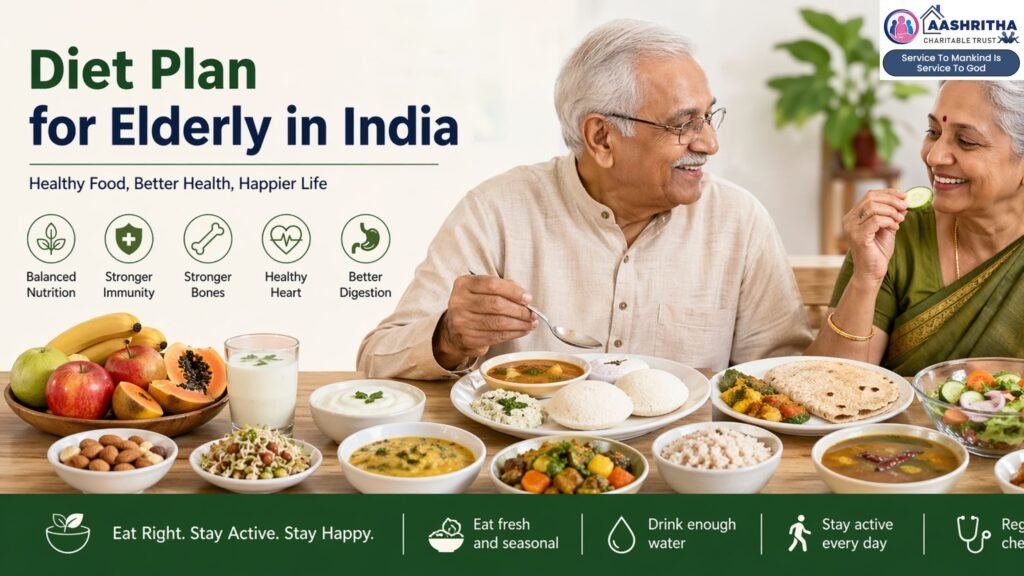
A well-balanced diet plan for elderly in India plays a crucial role in maintaining health, boosting immunity, and improving quality of life. As people age, their nutritional needs change, requiring a diet that is easy to digest, nutrient-dense, and tailored to common age-related conditions. This guide will help you understand how to create the best diet plan for elderly in India, especially for families in regions like Vijayawada and across India.
Why a Proper Diet is Important for the Elderly
Aging affects metabolism, digestion, and appetite. Many elderly individuals also deal with conditions like diabetes, hypertension, arthritis, and osteoporosis. A carefully structured diet plan helps:
- Improve digestion and nutrient absorption
- Maintain healthy body weight
- Strengthen immunity
- Prevent chronic diseases
- Enhance mental health and energy levels
Key Nutritional Requirements for Elderly in India
1. Protein for Muscle Strength
With age, muscle loss (sarcopenia) becomes common. Include:
- Lentils (dal), paneer, tofu
- Eggs and lean chicken (if non-vegetarian)
- Sprouts and legumes
2. Calcium & Vitamin D for Bone Health
Essential to prevent osteoporosis:
- Milk, curd, buttermilk
- Ragi (finger millet)
- Sunlight exposure (early morning)
3. Fiber for Digestion
Prevents constipation, a common issue:
- Whole grains (brown rice, oats)
- Fruits like papaya, apple
- Vegetables like spinach, carrots
4. Healthy Fats
Support heart and brain health:
- Nuts (almonds, walnuts)
- Seeds (flaxseeds, chia seeds)
- Mustard oil or groundnut oil
5. Hydration
Elderly often forget to drink water:
- 6–8 glasses of water daily
- Coconut water, soups, herbal teas
Foods to Include in a Diet Plan for Elderly in India
Breakfast Options
- Vegetable upma or poha
- Idli with sambar
- Oats porridge with fruits
- Whole wheat toast with peanut butter
Mid-Morning Snacks
- Fresh fruits (banana, apple, guava)
- Coconut water or buttermilk
Lunch Ideas
- Brown rice or chapati
- Dal or sambar
- Seasonal vegetables
- Curd
Evening Snacks
- Roasted chana
- Green tea with biscuits
- Sprouts salad
Dinner Options
- Light khichdi
- Vegetable soup with chapati
- Daliya (broken wheat porridge)
Foods to Avoid or Limit
- Excess salt (risk of high blood pressure)
- Deep-fried foods
- Sugary snacks and sweets
- Processed and packaged foods
- Carbonated drinks
Sample 7-Day Diet Plan for Elderly
Day 1
- Breakfast: Idli with sambar
- Lunch: Rice, dal, spinach curry
- Dinner: Vegetable khichdi
Day 2
- Breakfast: Oats porridge
- Lunch: Chapati, mixed veg, curd
- Dinner: Soup and toast
Day 3
- Breakfast: Poha
- Lunch: Brown rice, sambar
- Dinner: Daliya
(Continue similar rotation with regional foods common in Andhra Pradesh such as rasam, vegetable curries, and light tiffin meals.)
Special Diet Considerations
For Diabetes
- Avoid sugar and refined carbs
- Include low-GI foods like millets
For Hypertension
- Reduce salt intake
- Include potassium-rich foods like bananas
For Arthritis
- Include anti-inflammatory foods like turmeric and ginger
Diet Tips for Elderly in Vijayawada & Andhra Pradesh
In regions like Andhra Pradesh, traditional diets can be optimized for elderly care:
- Use less oil in curries
- Prefer steamed foods like idli over fried snacks
- Include local superfoods like ragi and drumstick leaves
- Avoid very spicy food to prevent acidity
Lifestyle Tips Along with Diet
- Eat small, frequent meals
- Maintain regular meal timings
- Engage in light physical activity (walking, yoga)
- Ensure proper sleep
- Regular health check-ups
Common Mistakes to Avoid
- Skipping meals
- Overeating at night
- Ignoring hydration
- Not adjusting diet for medical conditions
FAQs: Diet Plan for Elderly in India
1. What is the best diet plan for elderly in India?
A balanced diet including whole grains, proteins, fruits, vegetables, and dairy is ideal. It should be low in oil, salt, and sugar.
2. How many meals should elderly people eat daily?
Small, frequent meals (4–5 times a day) are recommended for better digestion.
3. Which fruits are best for elderly people?
Fruits like papaya, banana, apple, and guava are easy to digest and nutrient-rich.
4. Is milk good for elderly people?
Yes, milk and dairy products provide calcium and protein, essential for bone health.
5. What foods should elderly avoid?
Processed foods, fried items, excessive sugar, and salty snacks should be limited.
6. Can elderly people follow a vegetarian diet?
Yes, a well-planned vegetarian diet can meet all nutritional needs using dal, paneer, nuts, and vegetables.
Conclusion
Creating the right diet plan for elderly in India is essential for promoting healthy aging and preventing diseases. By incorporating nutrient-rich, easily digestible foods and maintaining a balanced lifestyle, elderly individuals can lead a healthier and more active life. Families in cities like Vijayawada and across Andhra Pradesh can benefit greatly by adapting traditional diets to meet modern nutritional needs.
Support Elderly Care – Make a Difference Today
At Aashritha, we are committed to improving the lives of elderly individuals by providing care, nutrition, and support.
👉 Donate to help provide nutritious meals
👉 Volunteer and spend time with senior citizens
👉 Partner through CSR initiatives to support elderly welfare
👉 Apply for Internships and contribute to meaningful change
Together, we can ensure every elderly individual lives with dignity, health, and happiness.