
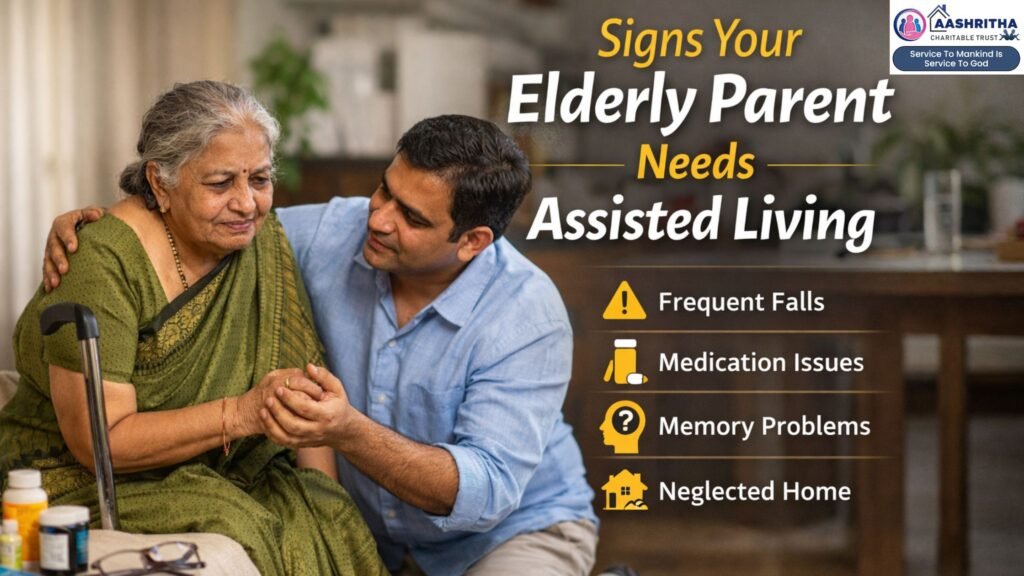
Caring for aging parents can be deeply rewarding yet emotionally complex. As our loved ones grow older, their needs change — sometimes subtly, other times suddenly. Recognizing the signs your elderly parent needs assisted living is a compassionate and practical step toward ensuring their safety, dignity, and quality of life. At Aashritha (https://aashritha.org/), we understand family concerns, especially for families in Vijayawada, Andhra Pradesh and across India. This guide will help you identify important signals and make informed decisions about assisted living care.
Introduction: Why Early Recognition Matters
When your parent begins to struggle with everyday activities, it’s not always obvious at first glance. Many families dismiss early signs as “normal aging.” However, ignoring these changes can increase risk of injury, social isolation, and emotional distress.
By knowing the signs your elderly parent needs assisted living, you can act before a crisis happens — safeguarding their health and preserving your peace of mind.
What Is Assisted Living?
Assisted living provides a supportive living environment for older adults who need help with daily tasks but don’t require full-time medical care found in nursing homes. These facilities promote independence, community involvement, and a structured routine, making them a balanced choice for many families.
Top 12 Signs Your Elderly Parent Needs Assisted Living
1. Difficulty with Daily Activities
One of the most noticeable signs is struggle with Activities of Daily Living (ADLs):
- Bathing and grooming
- Dressing
- Eating independently
- Using the bathroom safely
If your parent hesitates or avoids these tasks, it’s a strong indicator they may benefit from assisted support.
2. Frequent Falls or Fear of Falling
Falls are among the leading causes of injury in older adults. If your parent has experienced one or more falls — or expresses fear of falling — they may need a safer environment where help is readily available. Assisted living facilities are designed to reduce fall risks.
3. Forgetfulness Affecting Safety
Occasional forgetfulness is common, but when memory lapses lead to safety risks (like leaving the stove on, forgetting medications, or getting lost), this is a clear sign your elderly parent needs assisted living. Assisted care ensures supervision and medication management.
4. Poor Personal Hygiene
Neglecting hygiene — unbathed skin, dirty clothes, or inappropriate attire for weather — can signal inability to manage personal care. This often points to a need for supportive daily assistance.
5. Unexplained Weight Loss or Poor Nutrition
Healthy seniors should maintain a balanced diet. When your parent skips meals, hoards food, or shows sudden weight loss, this could indicate depression, physical difficulty, or cognitive decline. Assisted living provides structured meal times and dietary supervision.
6. Medication Mismanagement
Older adults often take multiple medications. Difficulty remembering dosages, skipping doses, or doubling up are dangerous habits. Assisted living staff can organize and administer medications appropriately.
7. Social Withdrawal and Mood Changes
If your parent withdraws from family, stops hobbies, or shows persistent sadness, these emotional changes may suggest loneliness, depression, or stress. Assisted living communities offer social activities that improve emotional wellbeing.
8. Increased Emergencies
A rise in emergency room visits, accidents, or health scares shows that current care may not be enough. Assisted living offers daily monitoring to prevent crises before they occur.
9. Neglected Home Environment
Clutter, spoiled food, unpaid bills, and unclean spaces signal that independent living may no longer be safe or sustainable. Assisted living ensures daily routines and organized living conditions.
10. Confusion With Money
Misplacing money, overspending, or failing to pay bills can leave your parent financially vulnerable. Assisted living reduces stress over these tasks and involves trusted staff or family in financial routines.
11. Lack of Transportation and Mobility
Inability to drive or safely travel alone can isolate older adults. Assisted living provides transportation services for medical appointments and community activities.
12. You Feel Overwhelmed as a Caregiver
Sometimes the sign your elderly parent needs assisted living isn’t in them — it’s in you. If caregiving is severely affecting your health, work, or family life, exploring assisted living can protect everyone’s wellbeing.
Signs in Context: Families in Vijayawada and Andhra Pradesh
In cities like Vijayawada, and throughout Andhra Pradesh, multi-generational households are common. While grandparents often live with children, increased urban lifestyle demands can create pressure on family caregivers. Recognizing these signs early — whether your elderly parent lives with you or independently — is critical. Assisted living doesn’t replace love; it complements care with trained support and community engagement.
Common Misconceptions About Assisted Living
It’s natural to worry about what others might think or feel guilty about transitioning a parent to assisted living. Here are some truths:
Misconception 1: “Assisted living means abandoning them.”
Truth: It means ensuring they get professional support while still enjoying family relationships and visits.
Misconception 2: “It’s only for very sick people.”
Truth: Assisted living is for those who need help with daily tasks — not just severe health issues.
Misconception 3: “Costs are too high.”
Truth: Many facilities offer a range of pricing options and support services. Community programs in Andhra Pradesh may also have subsidies or assistance.
Steps to Take Before Assisted Living
Before making a transition, consider these actions:
- Open the Conversation Gently
Talk with your parent about their needs and fears. Respect and empathy go a long way. - Assess Needs Objectively
Use checklists or speak with a doctor or geriatric care manager. - Visit Facilities Together
Touring assisted living homes builds comfort and confidence. - Review Costs and Insurance
Understand what is covered by insurance, pension, or government support. - Plan Transitions Carefully
Make sure medications, personal items, and routines are well organized for the move.
Frequently Asked Questions (FAQ)
Q1: What are the typical services provided in assisted living?
Assisted living facilities offer help with daily living tasks, medication management, meals, housekeeping, social activities, and sometimes transportation and basic health monitoring.
Q2: How do I know if assisted living is better than home care?
Home care works well when needs are limited and one-on-one care can be provided. Assisted living offers structured services, social community, and safety features under one roof — ideal when multiple signs (listed above) are present.
Q3: Will assisted living limit my parent’s independence?
No. Modern assisted living promotes independence by providing support where needed and encouraging participation in community life.
Q4: Can assisted living care handle mild dementia?
Yes, many facilities have programs and safety measures for mild cognitive impairments. However, advanced medical care may require specialized memory care units.
Q5: How do I fund assisted living care in Andhra Pradesh or Vijayawada?
Options include personal savings, pensions, community programs, and sometimes government support for elderly care. Speaking with financial planners or facility administrators can reveal options available locally in Andhra Pradesh.
Conclusion
Identifying the signs your elderly parent needs assisted living is a vital step in protecting the person you love. It’s not about giving up — it’s about recognizing when professional support can elevate safety, comfort, and emotional wellbeing. Whether your family is in Vijayawada, elsewhere in Andhra Pradesh, or anywhere in India, proactive care planning reflects love, dignity, and respect.
Your parent deserves the best quality of life — and with the right support, that’s possible.
Take Action Today
At Aashritha (https://aashritha.org/), we are committed to helping families navigate elder care with compassion and expertise.
👉 Donate to support elderly wellbeing programs
👉 Volunteer and make a real difference in seniors’ lives
👉 Partner for CSR initiatives focused on aging care
👉 Internship Opportunities — Join us in supporting India’s elderly community
➡ Visit https://aashritha.org/ to get involved or learn more!