Imagine a child sitting down for a school lesson while quietly wondering when their next meal will come. Imagine a parent choosing between buying food and paying for essential household expenses. Hunger is not simply the absence of food—it can affect health, education, productivity, dignity, and a person’s ability to build a better future.
This zero hunger goal explained guide explores the United Nations Sustainable Development Goal 2 (SDG 2), why ending hunger matters, the connection between food and nutrition, and how individuals, NGOs, communities, and businesses can contribute. In places such as Vijayawada and across Andhra Pradesh, local action can become part of a much larger effort to create a world where everyone has access to nutritious and sufficient food.
What Is the Zero Hunger Goal?
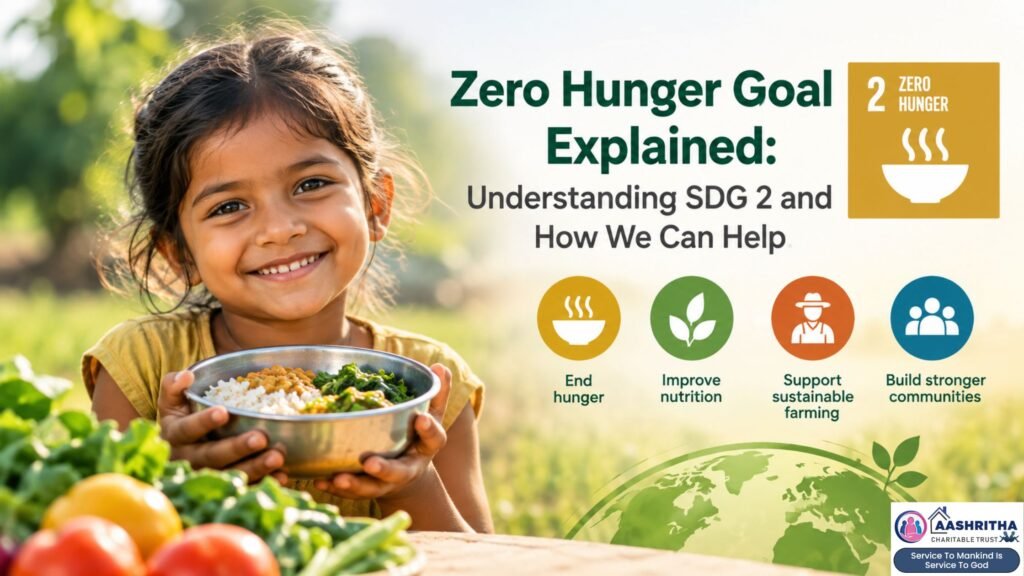
The Zero Hunger Goal, officially known as Sustainable Development Goal 2 (SDG 2), is one of the 17 Sustainable Development Goals established by the United Nations.
Its full objective is to:
End hunger, achieve food security and improved nutrition, and promote sustainable agriculture.
The UN’s Target 2.1 calls for ending hunger and ensuring that everyone—particularly people living in vulnerable situations and children—has access to safe, nutritious and sufficient food throughout the year by 2030.
Therefore, when we talk about the zero hunger goal explained, it is important to understand that the goal is much broader than simply providing meals.
It involves:
- Ending hunger
- Improving food security
- Reducing malnutrition
- Supporting healthy diets
- Improving agricultural sustainability
- Supporting vulnerable communities
- Strengthening food systems
- Helping people access food throughout the year
Zero Hunger is ultimately about creating conditions where people do not have to worry about whether they will have enough nutritious food tomorrow.
Why Is Zero Hunger Important?
Food is a basic human need. Without adequate nutrition, children can struggle to grow, learn and participate fully in school. Adults may face difficulties maintaining health and earning a stable income.
Hunger can also create a cycle of vulnerability. A family experiencing financial hardship may reduce food spending. Poor nutrition can affect health and productivity, which can make it harder to improve household income.
Global data shows why this challenge remains urgent. According to the UN Food and Agriculture Organization’s latest estimates, around 645 million people experienced hunger in 2025, representing approximately 7.8% of the global population. About 2.1 billion people experienced moderate or severe food insecurity during the same year.
Although global hunger declined in 2025, the world remains significantly off track from achieving the 2030 Zero Hunger ambition. The cost and affordability of healthy diets also remain important challenges.
These numbers represent real people—not statistics alone.
Behind every number is a family, child, elderly person, worker or community member who deserves access to adequate nutrition.
What Does SDG 2 Include?
A common misunderstanding is that Zero Hunger only means distributing food. In reality, SDG 2 includes several interconnected areas.
1. Ending Hunger
The first priority is ensuring that nobody has to regularly go without food.
Emergency meal programs, food distribution, community kitchens, food banks and social protection systems can help people experiencing immediate food insecurity.
2. Improving Nutrition
Having enough calories is not necessarily the same as having a healthy diet.
People need a combination of nutrients from foods such as grains, pulses, vegetables, fruits, proteins and other nutritious sources.
SDG 2 therefore also addresses different forms of malnutrition and the nutritional needs of children, women and vulnerable populations.
3. Food Security
Food security means people can consistently access enough safe and nutritious food.
Food security can be affected by poverty, food prices, unemployment, natural disasters, conflict, climate-related events and disruptions in food systems.
The UN’s work in India also connects food security and nutrition with access to adequate, affordable and diverse nutritious food throughout the year.
4. Sustainable Agriculture
Zero Hunger also depends on how food is produced.
Sustainable agricultural practices can help communities protect natural resources, strengthen food production and build resilience against environmental and economic challenges.
Farmers are an important part of the Zero Hunger solution because a resilient food system needs sustainable production as well as equitable access to food.
The Connection Between Poverty and Hunger
Hunger and poverty are closely connected.
For a low-income household, a rise in food prices can quickly affect the family budget. When nutritious food becomes less affordable, families may have to make difficult choices.
The 2025 State of Food Security and Nutrition in the World report highlighted the impact of food price inflation on purchasing power and access to healthy diets, particularly among vulnerable populations.
This is why solving hunger requires more than short-term food distribution.
Long-term solutions can include:
- Livelihood support
- Nutrition education
- Community food programs
- Agricultural support
- Social protection
- Women’s empowerment
- Child nutrition initiatives
- Responsible corporate involvement
- Local community partnerships
A meal can address today’s hunger. Sustainable community support can help address the conditions that create food insecurity.
Zero Hunger in Vijayawada and Andhra Pradesh
The global Zero Hunger mission may seem enormous, but meaningful action can begin at the community level.
In Vijayawada and other parts of Andhra Pradesh, NGOs, volunteers, community organizations and socially responsible businesses can contribute to food security through local initiatives.
Community kitchens, food distribution programs, nutrition support for children, support for vulnerable families and awareness programs are examples of activities that can contribute to the broader Zero Hunger objective.
Local action matters because community organizations often understand the needs and circumstances of the people they serve.
For example, a food-support initiative in Vijayawada can focus on identifying vulnerable families, providing nutritious meals and connecting beneficiaries with additional support services where appropriate.
The broader lesson is simple:
Global goals become meaningful when communities turn them into local action.
What Can NGOs Do to Support Zero Hunger?
NGOs can play an important role in connecting resources with people who need support.
Organizations such as Aashritha can contribute through initiatives that focus on community welfare, food support, nutrition and vulnerable populations.
Effective programs may include:
- Providing nutritious meals
- Supporting community kitchens
- Organizing food donation drives
- Helping children access nutritious food
- Supporting vulnerable families
- Conducting nutrition awareness programs
- Encouraging volunteer participation
- Building partnerships with businesses
- Creating sustainable community-support programs
However, food assistance should ideally be designed with dignity and long-term impact in mind.
The objective is not simply to hand someone a meal. It is to help create a community where fewer people are forced to experience hunger in the first place.
How Can Individuals Help Achieve Zero Hunger?
You do not need to be a large organization to contribute.
Small actions can become meaningful when many people participate.
Donate
A donation can help support food programs, community kitchens, nutrition initiatives and other activities benefiting vulnerable communities.
Instead of donating excess food without considering nutritional or logistical needs, consider supporting an organization that can identify what the community actually requires.
Volunteer
Volunteers can help with:
- Meal distribution
- Food collection drives
- Community events
- Awareness campaigns
- Administrative activities
- Fundraising
- Community outreach
Your time can be just as valuable as your financial contribution.
Reduce Food Waste
Food that is unnecessarily wasted represents resources that were used to produce, transport and prepare it.
Planning meals, storing food correctly and sharing suitable surplus food through responsible channels can help reduce waste.
Support Local Communities
Supporting local farmers, community organizations and responsible food initiatives can contribute to stronger local food systems.
How Businesses Can Support Zero Hunger Through CSR
Businesses have an important opportunity to connect Corporate Social Responsibility (CSR) programs with SDG 2.
A company can support Zero Hunger initiatives through CSR funding, employee volunteering, food programs, nutrition initiatives or partnerships with credible NGOs.
CSR support can potentially fund:
- Community kitchens
- Child nutrition programs
- Food distribution
- Nutrition awareness
- Sustainable agriculture initiatives
- Food security projects
- Community development programs
For companies operating in Vijayawada, Andhra Pradesh or elsewhere in India, partnering with an experienced NGO can help turn CSR resources into structured community initiatives.
A CSR partnership should ideally include clear objectives, defined beneficiaries, transparent implementation and appropriate impact reporting.
Why Donating to Hunger-Relief Programs Matters
Picture a child receiving a nutritious meal after spending the day hungry.
The meal may look simple.
But for that child, it can mean energy to participate in school, relief from hunger and a moment of dignity.
Now imagine that experience repeated across hundreds or thousands of people.
That is the power of organized community action.
A donation does not need to solve global hunger alone. Instead, it can become one contribution within a much larger network of people and organizations working toward food security.
When donations are combined with volunteering, CSR partnerships, awareness and sustainable community programs, their potential impact can extend beyond a single meal.
Aashritha’s Role in Creating Community Impact
Aashritha aims to contribute to social welfare by connecting people who want to help with causes and communities that need support.
Through responsible giving, volunteering, CSR participation and community initiatives, individuals and organizations can become part of efforts addressing important social challenges.
If Zero Hunger is a cause that matters to you, consider taking one practical step today.
You could donate to support community initiatives, volunteer your time, explore a CSR partnership, or apply for an internship and gain hands-on experience in social-impact work.
Frequently Asked Questions About the Zero Hunger Goal
What is the Zero Hunger Goal?
The Zero Hunger Goal is Sustainable Development Goal 2 (SDG 2) of the United Nations. It aims to end hunger, achieve food security, improve nutrition and promote sustainable agriculture by 2030.
Why is Zero Hunger important?
Zero Hunger is important because adequate nutrition supports health, child development, education, productivity and overall well-being. Hunger and food insecurity can also reinforce cycles of poverty and vulnerability.
Is Zero Hunger only about providing food?
No. Zero Hunger includes ending hunger, improving nutrition, achieving food security and promoting sustainable agriculture. It also requires addressing factors such as food affordability, resilient food systems and access to nutritious diets.
How many people experience hunger globally?
FAO estimates that approximately 645 million people experienced hunger in 2025, or 7.8% of the global population.
How can I support Zero Hunger in Vijayawada?
You can support local initiatives by donating, volunteering, organizing responsible food-support activities, participating in awareness programs or connecting your company with an NGO for CSR collaboration.
How can companies support SDG 2 through CSR?
Companies can consider supporting community kitchens, nutrition programs, food security initiatives, food distribution projects and sustainable community development through structured CSR partnerships with NGOs.
Can students contribute to Zero Hunger?
Yes. Students can volunteer, organize awareness campaigns, participate in fundraising, support food drives and explore internships with organizations working on social-impact programs.
Conclusion: Zero Hunger Starts With Action
Understanding the zero hunger goal explained is only the beginning. The real challenge is turning awareness into action.
The United Nations’ SDG 2 provides a global framework, but achieving meaningful progress also depends on communities, NGOs, governments, businesses, volunteers and individuals working together. Current global data shows both progress and the scale of the remaining challenge.
In Vijayawada, across Andhra Pradesh and throughout India, every responsible contribution can become part of a larger movement for food security and better nutrition.
You can help make a difference today.
Donate to support hunger-relief and community initiatives.
Volunteer your time and skills to help people in need.
Partner through CSR to support structured, long-term social-impact programs.
Apply for an Internship to learn, contribute and gain practical experience in the social sector.
Visit Aashritha at https://aashritha.org/ and take your next step toward building communities where access to nutritious food is not a privilege, but a foundation for a healthier and more dignified life.